


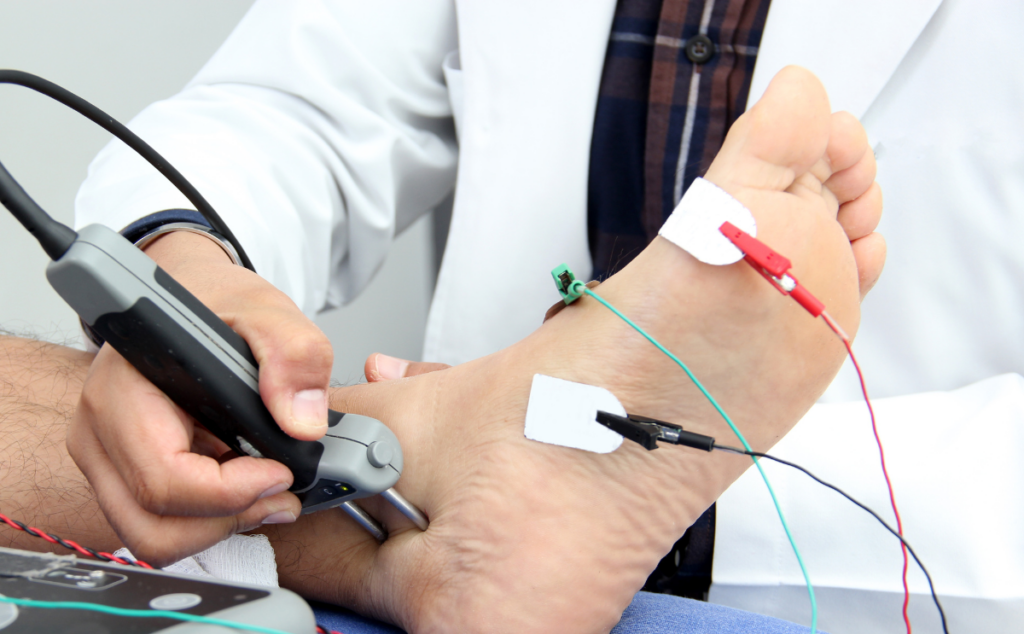
What is an EMG/NCS?
Electromyography (EMG) evaluates the electrical activity that muscles generate at rest and in response to contraction. A nerve conduction study (NCS) evaluates the integrity of individual nerves. The combined study aids in determining the source of pain, numbness or weakness.
What should I do to prepare?
Wear clothing that allows for easy access to the affected area if possible. Shower the day of your test, and do not use any creams, moisturizers, or powders on your skin. Avoid aspirin, aspirin-containing products, or anti-inflammatory drugs (e.g., ibuprofen) for one week before the EMG if possible. (Consult your physician prior to stopping any medications.)
How Long Will It Take?
The procedure takes about 30-90 minutes. This will vary depending on the number of nerves and muscles that need to be tested as well the level of complexity of the individual patient.
What can it diagnose?
These tests can help diagnose a variety of conditions affecting the nervous and muscular systems. They are particularly useful for identifying:
- Neuromuscular disorders such as amyotrophic lateral sclerosis (ALS) and myasthenia gravis.
- Nerve compression or injury conditions, including carpal tunnel syndrome and peripheral neuropathies.
- Disorders affecting the nerve root, such as herniated discs in the spine.
- Other conditions like muscular dystrophy and peripheral nerve disorders.


Will It Hurt?
The NCS portion of the test will feel like small shocks. The EMG portion of the test is completed using an electrode embedded in a needle that is inserted into muscles. The level of discomfort is typically considered mild to moderate by our patients. You may stop the test at any time if it feels too uncomfortable. After the test, you may have minor muscle aches up to several days, but over 99% of patients have no discomfort upon completion of the study. Warm compresses and over the counter pain medication can help if you experience any post-test discomfort.
What can I expect to happen during the procedure?
During the NCS, the technician will tape electrodes to the skin that record the response of individual nerves to a small shock applied to the surface of the skin. During the EMG, a doctor will insert a small needle electrode into the muscle and analyze the waveform produced by muscle contraction.
What should I do after the procedure?
You may resume your normal activities immediately. Resume any medication you may have stopped before the test.